
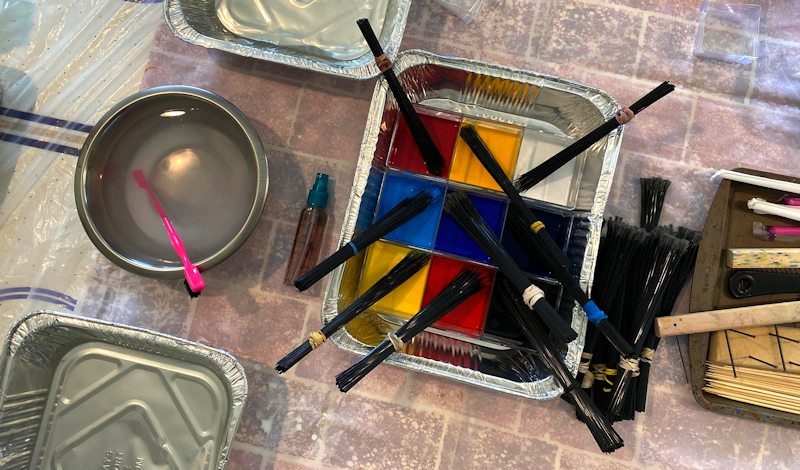
One of my most colorful passions, marbling is both an art and a craft that can stretch creativity to new dimensions. Ebru marbling is an 800-year-old Turkish art form, but its application is just as fresh and fascinating now as it was hundreds of years ago.
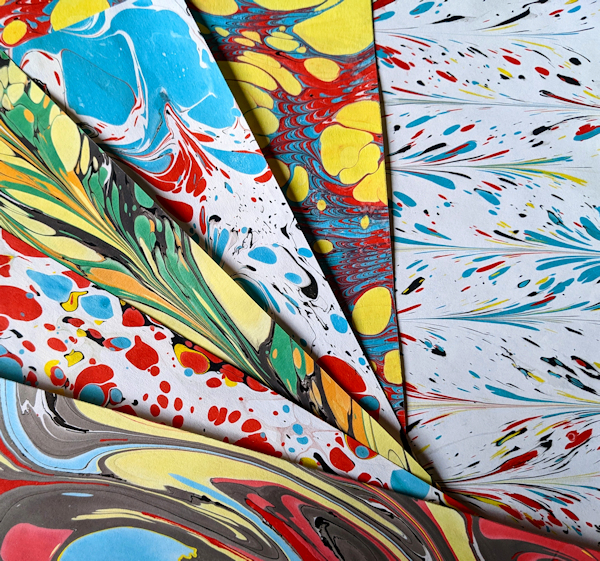
I was introduced to ebru marbling 2021 by my friends at Little House Journals. They asked me if I’d like to try something new: making end papers for their hand-crafted journals. They sent me a kit. I immediately fell for the art form that I could neither predict nor control like other mediums.
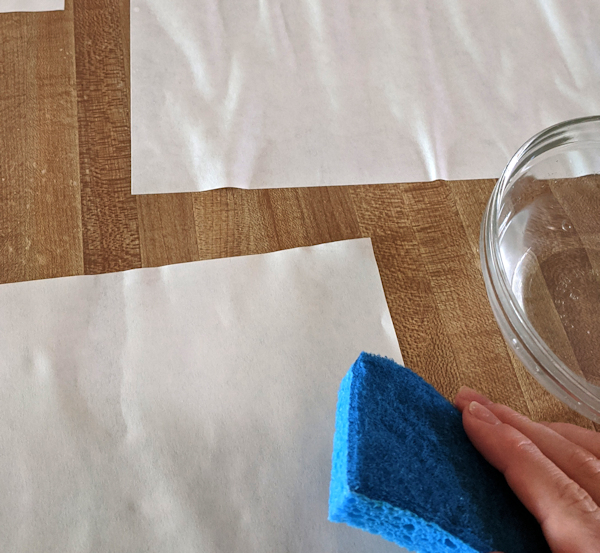
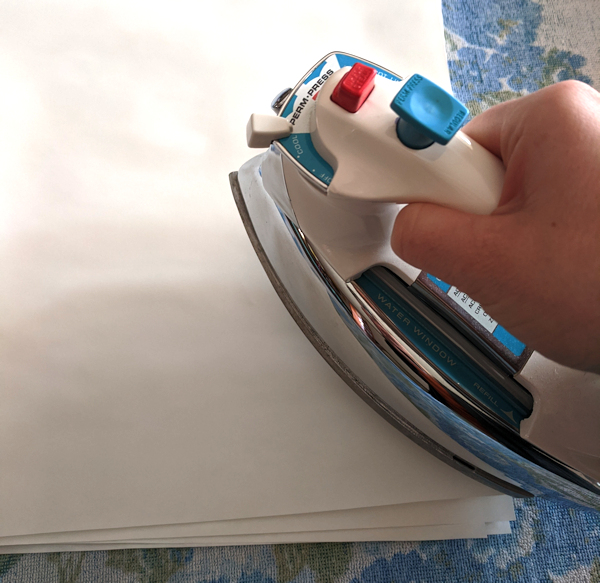

Though there is some prep with several specific materials, the process itself is fairly simple.
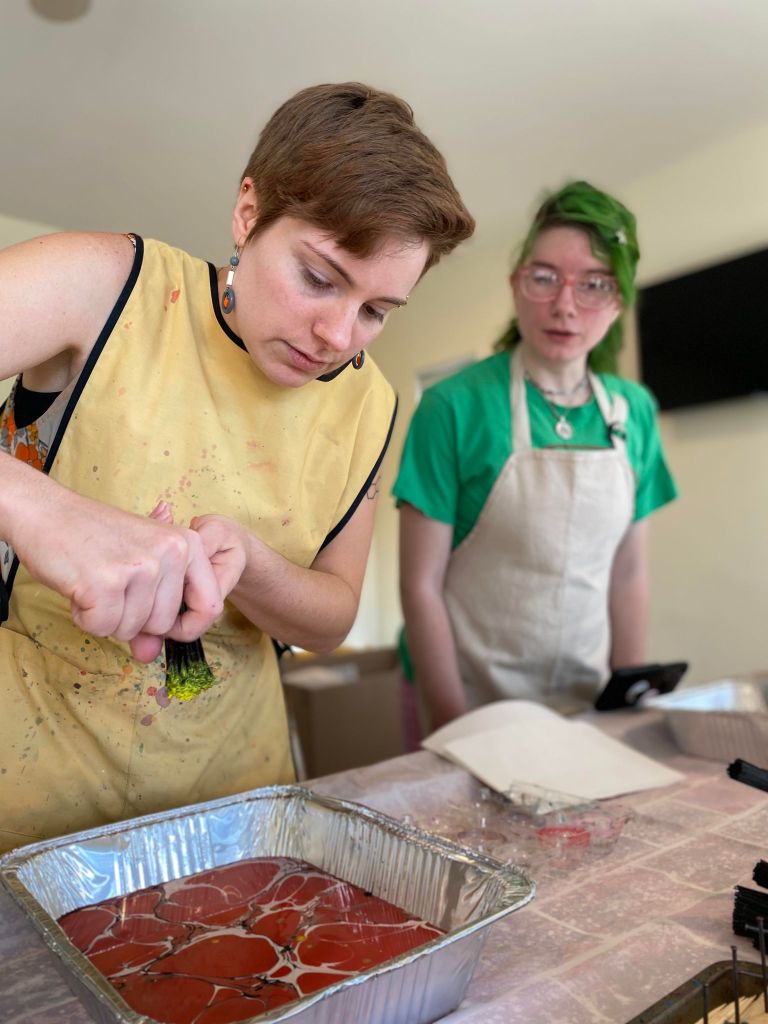
How it works: Acrylic paints mixed with water and gall (a thinner), are floated on a thickened “bath” of carrageenan (Irish moss) water, then they are manipulated into different patterns with rakes, combs or straws. A paper, pre-prepared with alum (aluminum sulfate), is laid face-down on the bath and the pattern is transferred. Then the paper is rinsed, dried and flattened.

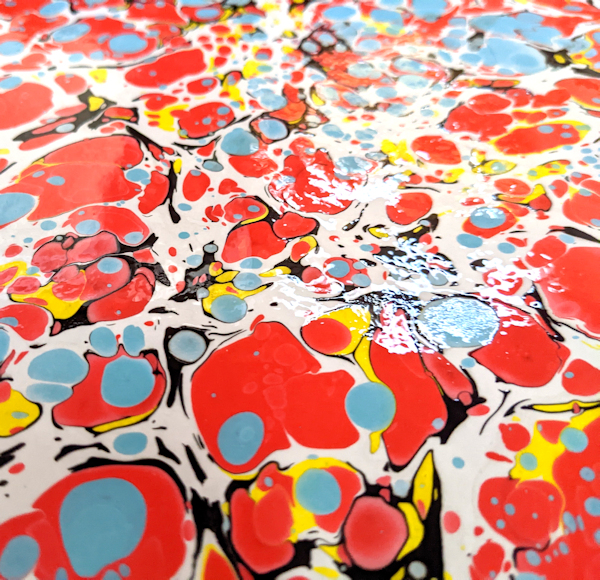
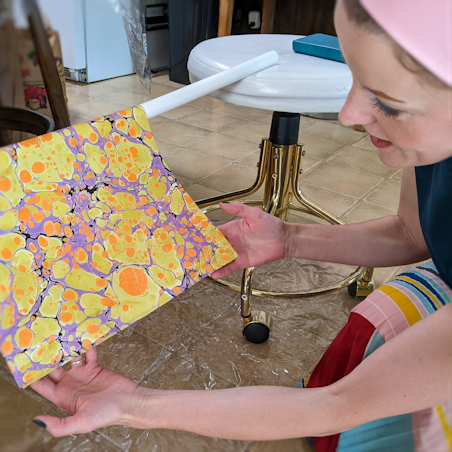
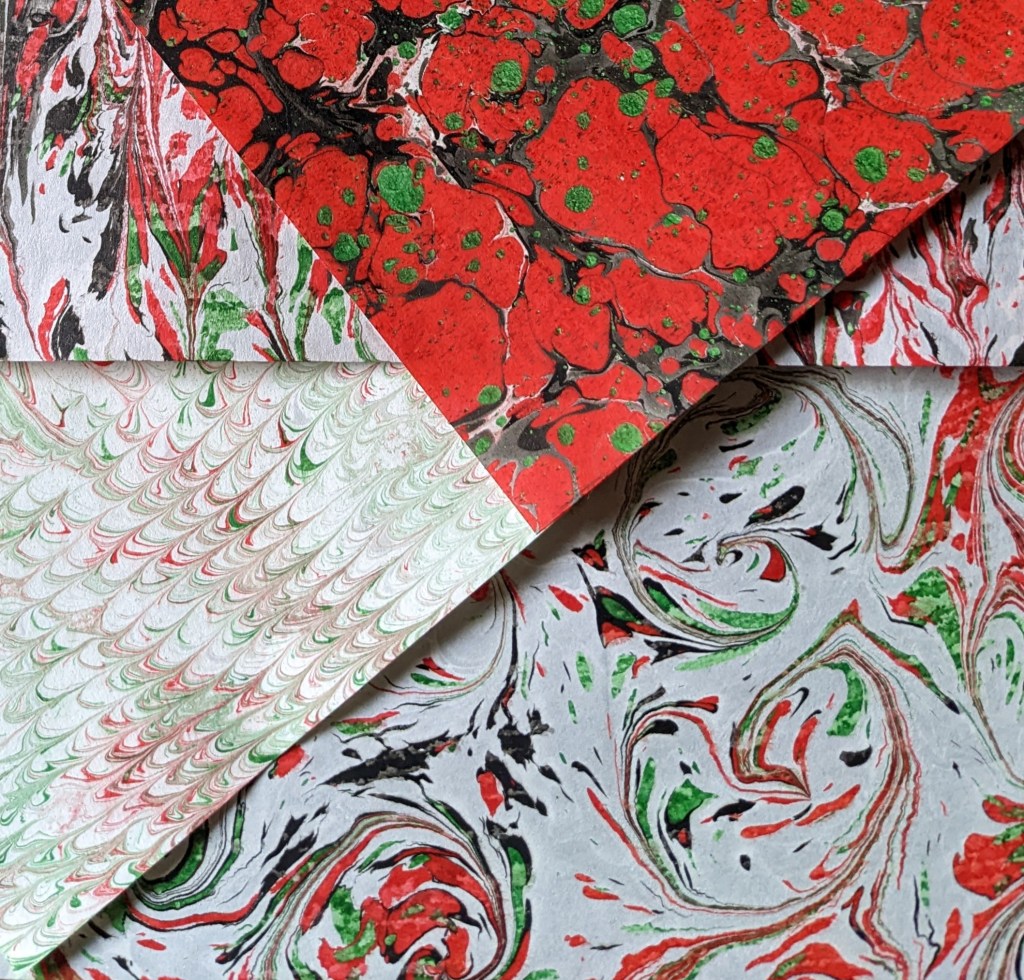
Over many years I’d built up a collection of pleasing color combinations, saving them for some unknown purpose. Marbling is a playground for those colors and I. Whenever I see an inspiring combination, I make a note of it and add it to my color book.
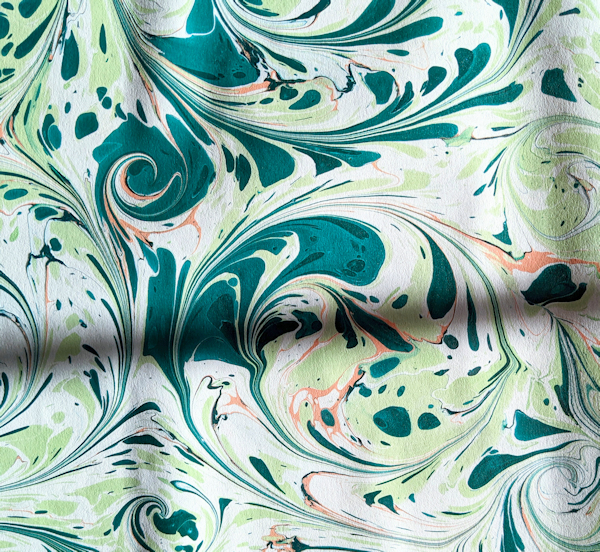
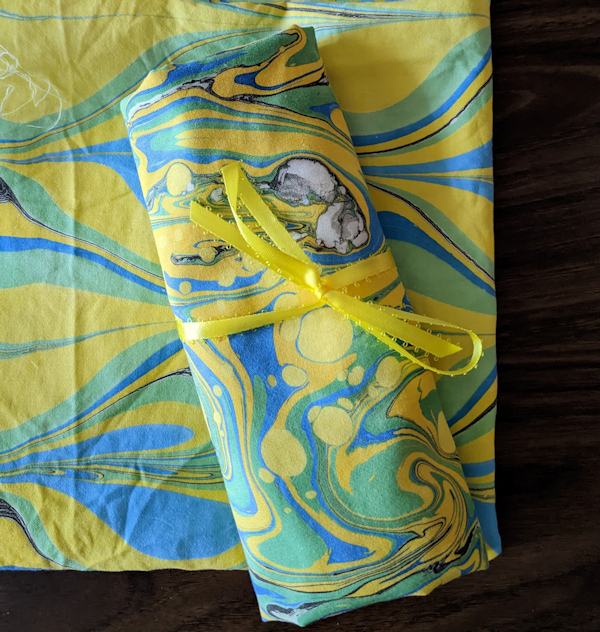
Where with my fine art the result is often long labored and carefully displayed, marbled paper is purposefully practical: a marriage of art and application. It’s traditionally used to cover bookbinding stitching and glue, but it can also be used for stationery, jewelry, even lampshades–I’ve yet to explore all the possibilities for this medium.
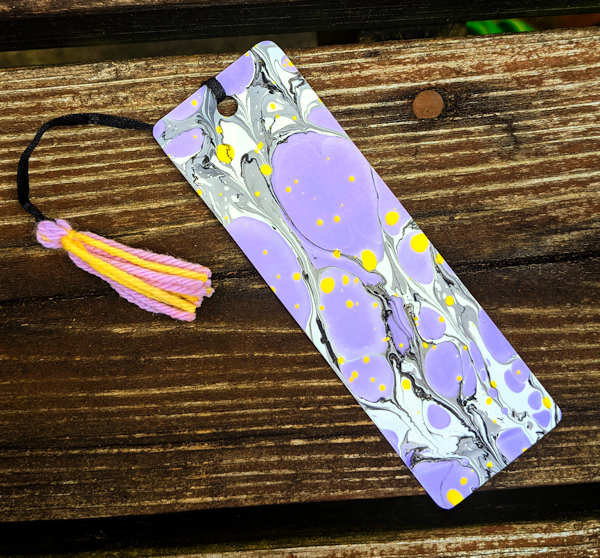
I sell many of my papers locally, where they are used by several businesses in their hand-crafted products. Some of them have become journal endpapers, others are now bookmarks, earrings and origami creations.
The technical prep must be done a day in advance, but each paper may take only minutes to print. I must work quickly before the pigments separate–forcing me to be flexible, rather than fussy. This turns out to be exactly what I need to relax and stretch creatively, without too much pressure weighing on results.
At left–an “action shot” of pigment being tapped onto a pan of bath, while a demo participant looks on.
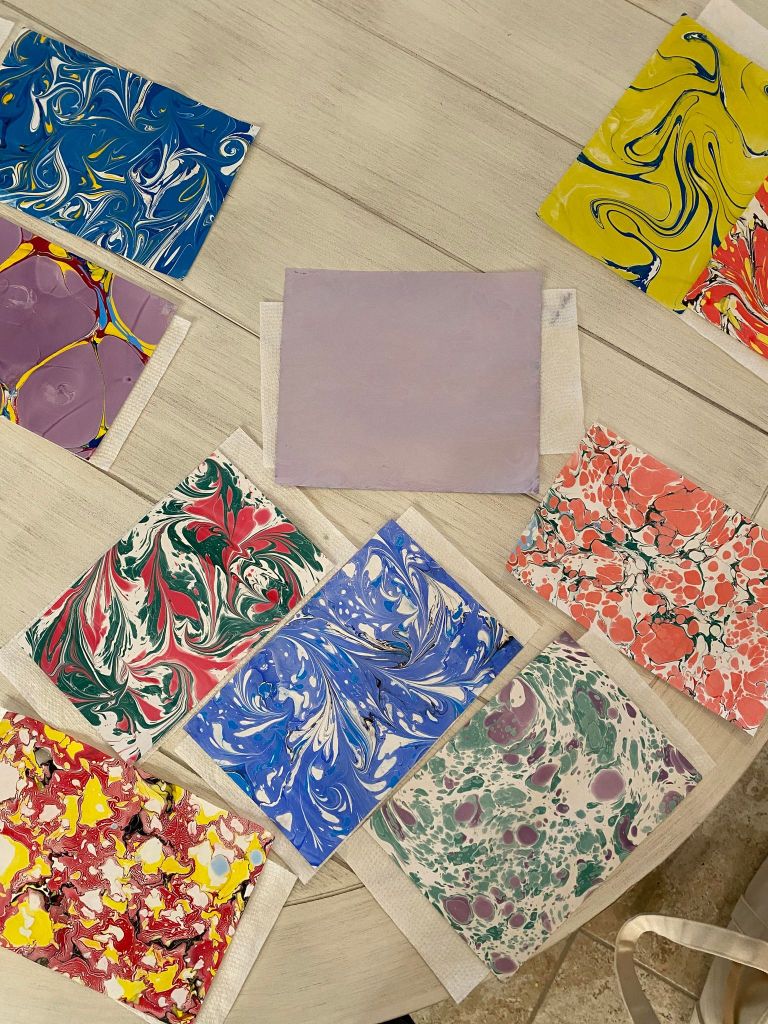
Even with practice, I never know exactly how a paper will turn out. But that’s ok, because they are always beautiful or interesting in their own way. Most wonderfully, each piece is unique–impossible to duplicate. Demos and classes are in the works for the future.
 V. Leigh Artworks